

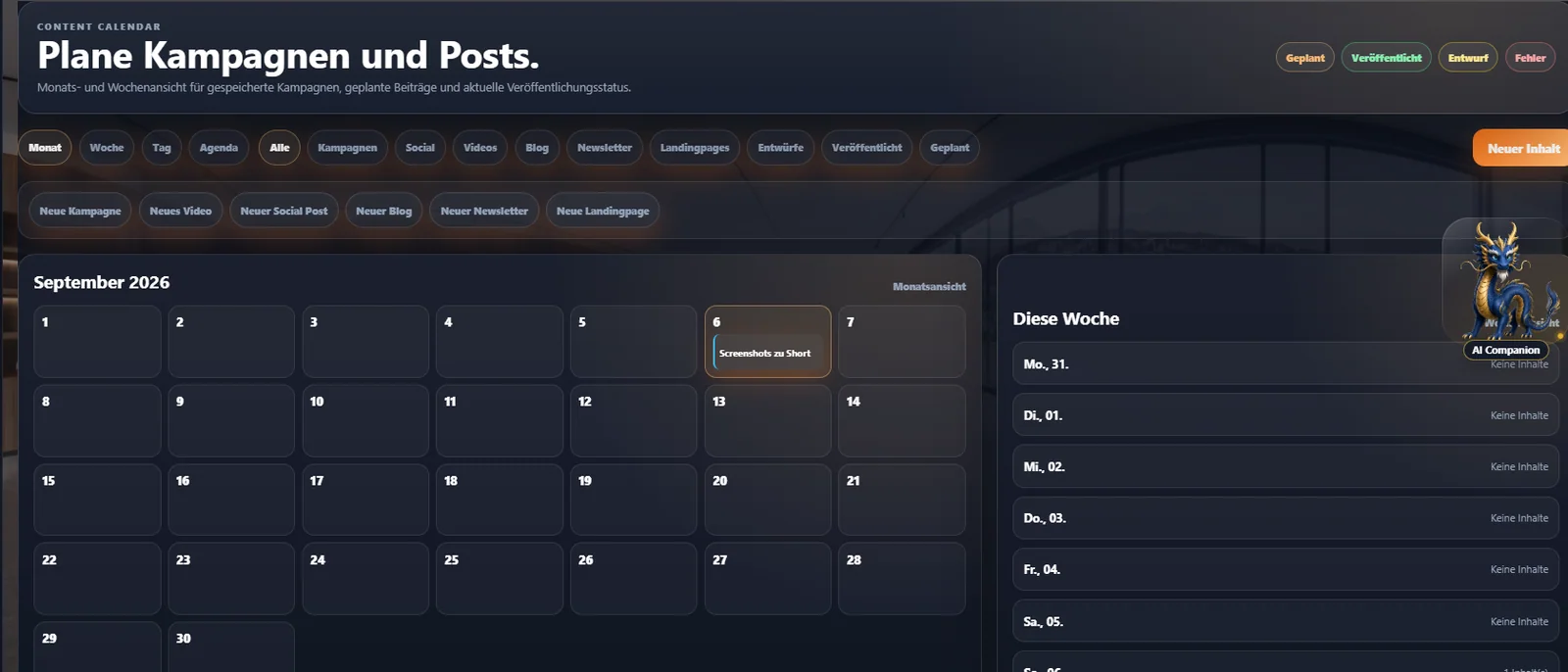
Start with goal and capacity, not with 30 ideas
A monthly plan becomes useless if it promises more content than the team can review and maintain. Start with a business goal, the relevant target groups and the actual available production and release time. A small team with two review windows per week needs a different rhythm than an editorial team with daily responsibilities.
Also determine which channels really have their own role in the month. Instagram can show products and visual processes, LinkedIn can deepen professional perspectives, Pinterest can support lasting discovery, and TikTok can carry short demonstrations. The roles prevent the same post from being copied seven times.
- a primary monthly goal
- zwei bis vier wiederkehrende Themenlinien
- realistic number of testable content
- clear channel roles
- fixed review window plus reserve
A content matrix connects topics with formats
Instead of writing individual posts straight away, build a matrix. The lines contain topics such as product benefits, work processes, customer questions, objections and specialist knowledge. Channels and suitable formats are listed in the columns. Different contributions can then arise from one topic: a short video hook, a sequence of steps, a comparison, a checklist or an explanatory text.
The matrix makes gaps visible. If every week only contains product advertising, trust is likely lacking. If every idea requires a video, there is no economic mix of formats. A good plan combines complex lead pieces with easier derivations and deliberately leaves free slots for current events.
Translate the month into repeatable weekly rhythms
A workable rhythm can consist of one lead content, two channel-related derivatives, one community post and one flexible slot per week. This is not a universal number. What's crucial is that each release has a purpose and the production load stays spread out across the month.
Plan the immutable dates first: product launch, event, season change, or release deadline. Thematic lines are then added. Reserve places really remain free; they are not a secret residue. With seven posts per week, 28 content slots are created in four weeks, but only if the team can produce and review this amount sensibly.
Example for a week
Monday sets the technical focus, Tuesday shows a practical process, Wednesday answers a common question, Thursday translates the topic into a visual format and Friday bundles insights or invites discussion.
- Monday: classification or central thesis
- Tuesday: How-to
- Wednesday: Objection or FAQ
- Thursday: Visual or Short
- Friday: Checklist, review or community question
Plan production and release backwards
Each publication date requires a final review time. From there we plan backwards: final adjustment, technical review, creative, draft text and briefing. This order reduces hectic release day releases.
The review should not only check spelling. The decisive factors are the statement, product fact, target group, CTA, medium, format and target account. Changes will be made to the specific post. Recurring preferences may only be incorporated into future campaigns as a rule after several confirmed cases.
Month-end closing creates the next better plan
At the end of the month, not only reach and likes are considered. Check which content supported clicks, qualified inquiries, shopping cart actions or orders and which allocation is actually documented. Separate confirmed results from derived signals and unattributable sales.
Also document operational findings: Which formats caused rework? Which releases came too late? Where were assets missing? This information often improves the next month's plan more than a blanket look at the most successful post.
FAQ
How many posts should a monthly plan contain?
As many as the team can sensibly produce, test and maintain. An internal target is only useful if it takes into account channel roles, quality, and available capacity.
Should the same content appear on all platforms?
The core message can remain the same. Entry, format, text length, medium and CTA should be adapted to the context of use of the respective channel.